
Commercial Food Photography on a Budget: 2025 Guide
Quick navigation:
Understanding the Real Cost of Commercial Food Photography
Understanding the Real Cost of Commercial Food Photography
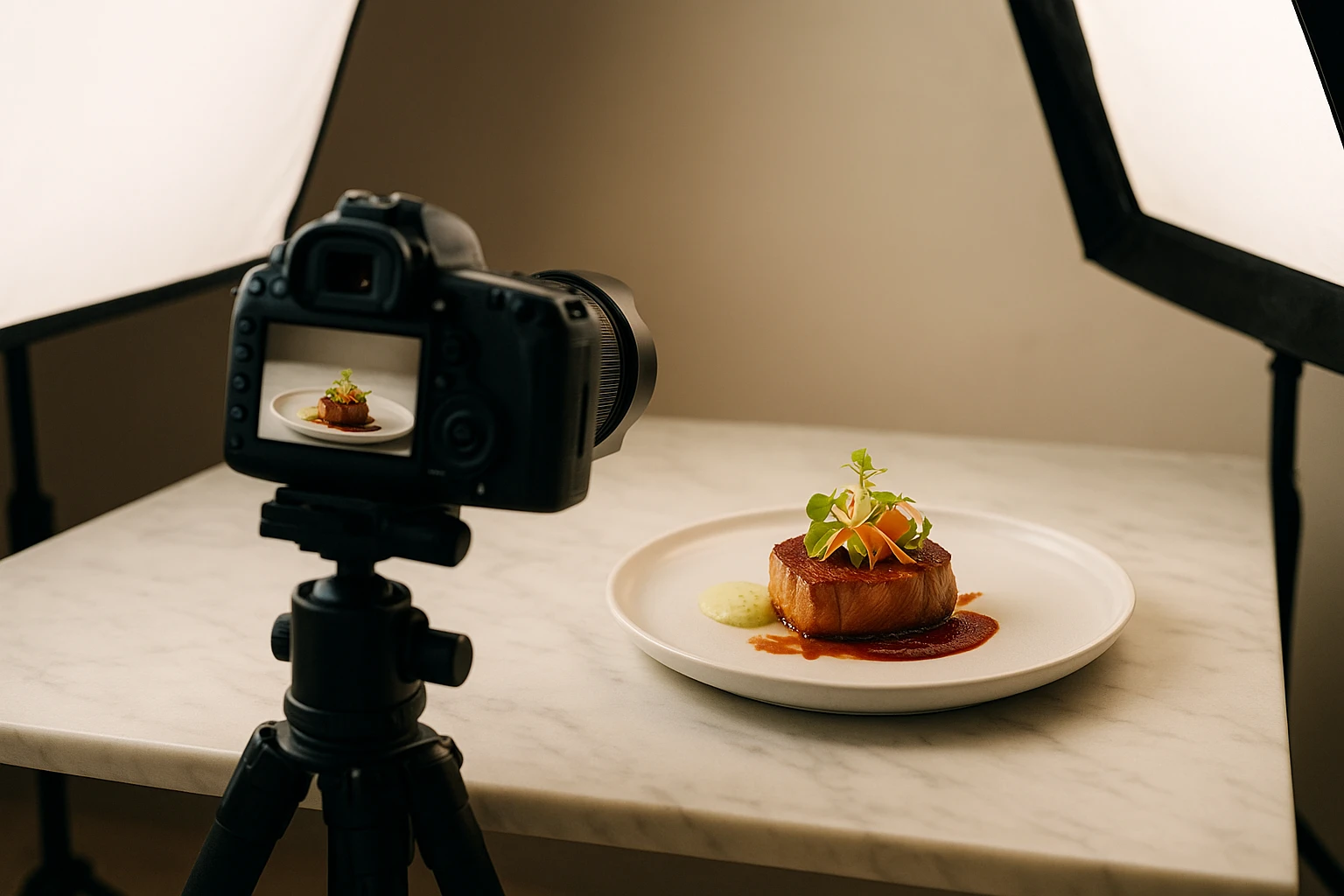
When restaurants budget for imagery, sticker shock often catches them off guard. A single professional photoshoot can consume an entire quarter’s marketing budget. This leaves little room for the ongoing visual content that modern digital channels demand. The pricing reflects not just the photographer’s time. It includes specialized professionals, equipment, and post-production work.
Breaking down a typical quote reveals multiple line items that add up quickly. You’re paying for the photographer’s expertise ($75-200 per hour). Food stylist fees run $400-800 per session. Studio rental costs $200-500 per day. Add equipment rentals, props, and post-processing work.
A comprehensive menu photoshoot covering 20 dishes commonly ranges from $3,000 to $6,000. Delivery timelines stretch 2-4 weeks from booking to final files. This upfront investment makes sense for brand launches or seasonal campaigns. However, it becomes unsustainable for businesses needing fresh content weekly or daily.
The hidden costs extend beyond the invoice. Traditional shoots create scheduling bottlenecks. Coordinating photographer availability, food prep timing, and venue access can delay projects by weeks. Once the shoot happens, you’re locked into those specific images. If your menu changes or branding evolves, you’re back at square one. Another substantial invoice awaits. This rigidity hurts delivery-only concepts, food trucks, and menus that need constant visual refreshes.
Yet quality food imagery makes a huge difference. Professional photos directly influence ordering decisions on delivery platforms. They increase social media engagement and improve perceived food quality. The challenge isn’t justifying the expense. It’s finding a sustainable model that matches modern food marketing’s pace. Understanding these cost structures helps businesses evaluate alternatives. When do pro shoots deliver value? When could smarter options free up budget?
Cost Breakdown: Traditional Food Photoshoot
| Component | Typical Cost Range | Time Investment |
|---|---|---|
| Photographer | $75-200/hour | 4-8 hours shoot time |
| Food Stylist | $400-800/session | Full day on-site |
| Studio Rental | $200-500/day | N/A |
| Equipment & Props | $100-300 | Varies |
| Post-Processing | $50-150/hour | 1-2 weeks delivery |
| Total (20 dishes) | $3,000-6,000 | 2-4 weeks total |
Traditional Food Photoshoot Cost vs. Modern Alternatives
Traditional Food Photoshoot Cost vs. Modern Alternatives
Food imagery has transformed over the past decade. Options now span from premium traditional shoots to instant AI generation. Understanding where each approach sits on the cost-quality-time triangle matters. It helps businesses match the right solution to specific needs. Don’t default to expensive pro photography out of habit.
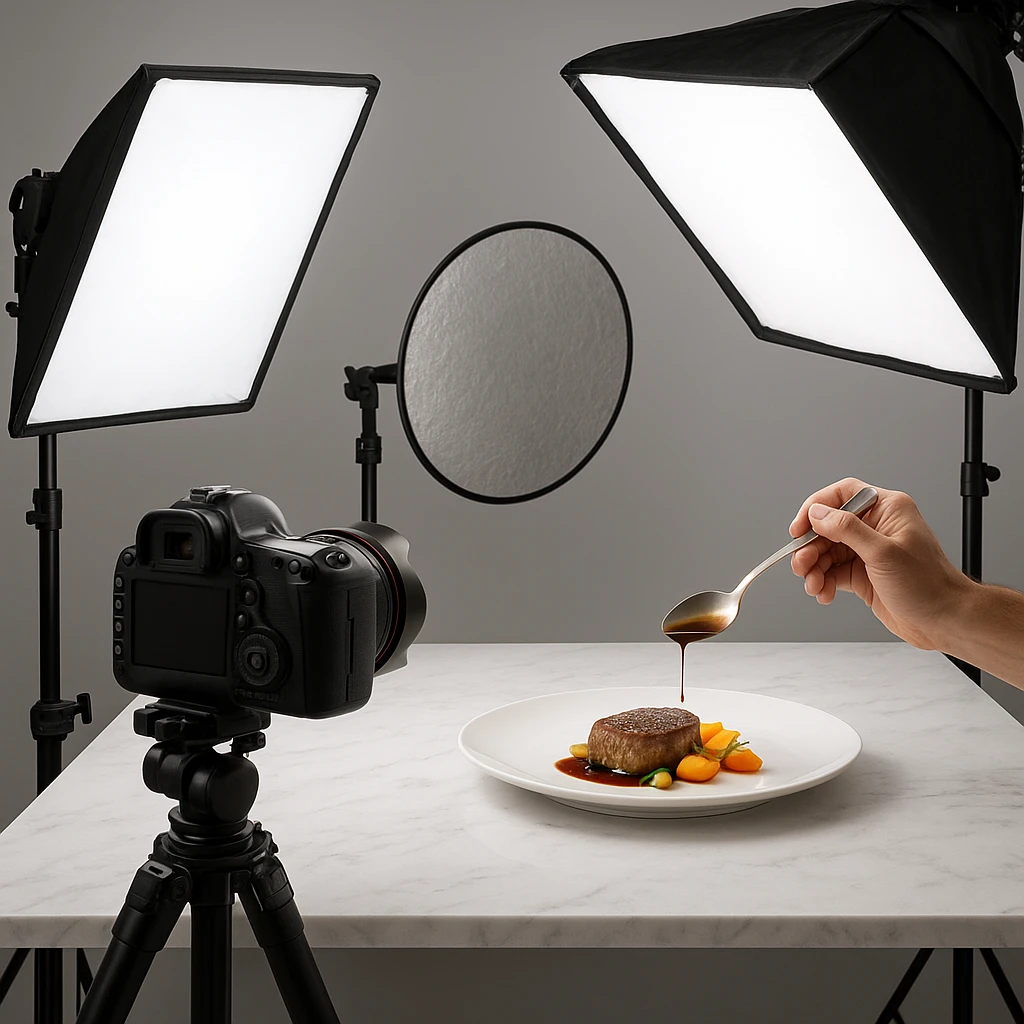
Traditional pro commercial food photography remains the gold standard for certain use cases. High-end restaurant websites, brand campaigns, and print materials benefit from this artisanal approach. The collaboration between photographer, food stylist, and chef produces authentic imagery. This artistry is hard to replicate. However, quality comes at a premium in budget and flexibility. Each shot requires hours of setup and multiple takes. Extensive post-processing follows. Want to change a prop or try a different angle? You restart the entire process.
Modern alternatives address specific pain points in the traditional model. Freelance marketplaces like Upwork connect businesses with photographers at lower food photography pricing than established studios. Expect $50-150 per image versus $150-300 for established studios. This middle ground offers professional quality without studio overhead. Trade-offs include inconsistent quality and limited availability during peak periods. The vetting process takes time too. You need to review portfolios and conduct test shoots. Savings diminish if you frequently switch photographers.
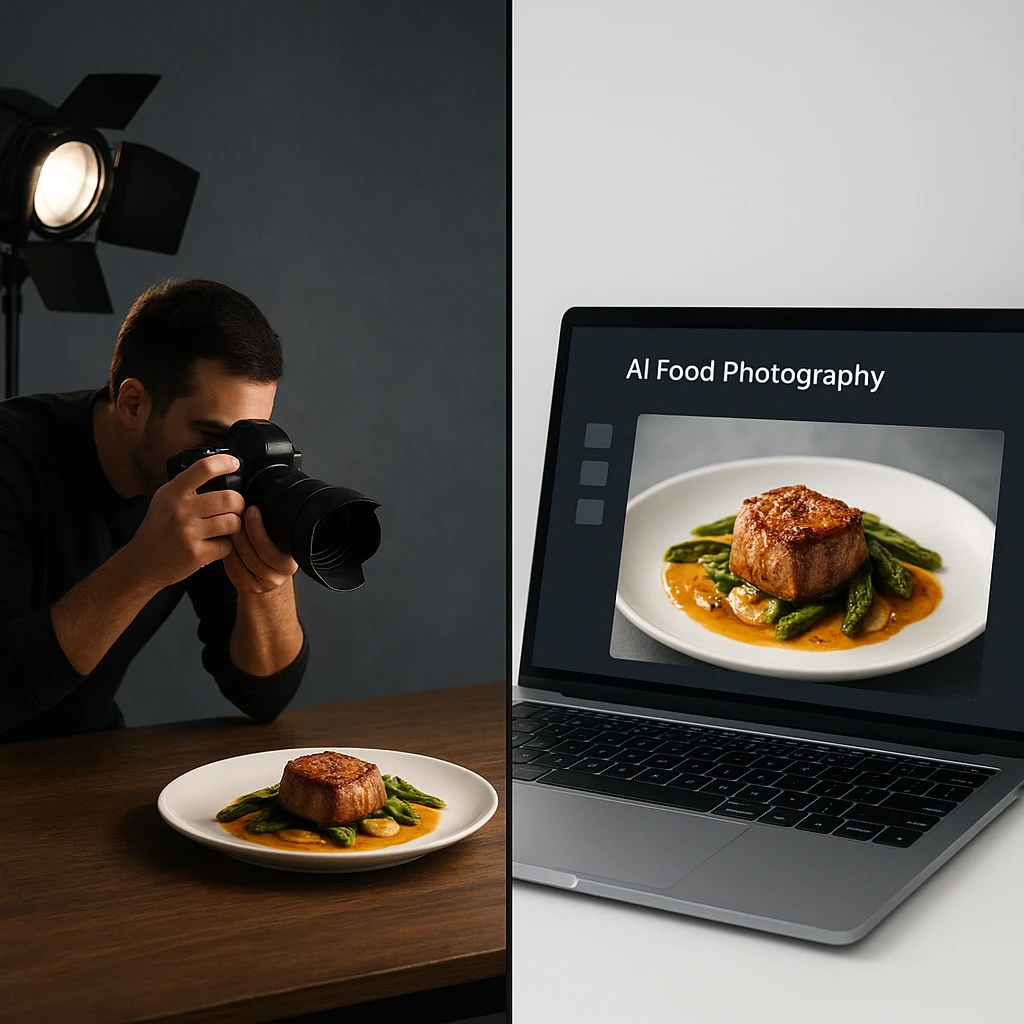
The biggest disruption comes from AI-powered platforms. These tools generate professional-grade images in minutes, not weeks. They use text prompts or reference photos as input. Credit-based subscriptions replace per-project pricing with predictable monthly costs.
A restaurant needing 50 new images monthly might pay a fixed subscription fee. That beats $7,500 at traditional rates. Speed enables rapid iteration. Generate five variations of a burger photo. Test which performs best on social media. Scale the winner across all channels. This testing capability doesn’t exist with traditional shoots without prohibitive costs.
Comparing Food Photography Approaches
| Approach | Cost Per Image | Time to Delivery | Best For |
|---|---|---|---|
| Traditional Studio | $150-300 | 2-4 weeks | Hero shots, brand campaigns, print |
| Freelance Photographer | $50-150 | 1-2 weeks | Ongoing content, moderate budgets |
| DIY with Smartphone | $0 (plus time) | Same day | Social posts, tight budgets |
| AI Generation (Yummify) | Credit-based | Minutes | High volume, A/B testing, rapid updates |
Each approach fills specific niches. Smart businesses combine methods strategically. Use professional shoots for signature dishes. Use AI or freelancers for high-volume categories. This hybrid commercial food photography approach optimizes both budget and impact. Allocate premium resources where they deliver maximum return. Maintain consistent content flow across all channels.
The DIY Approach: Capturing Professional Shots In-House
The DIY Approach: Capturing Professional Shots In-House
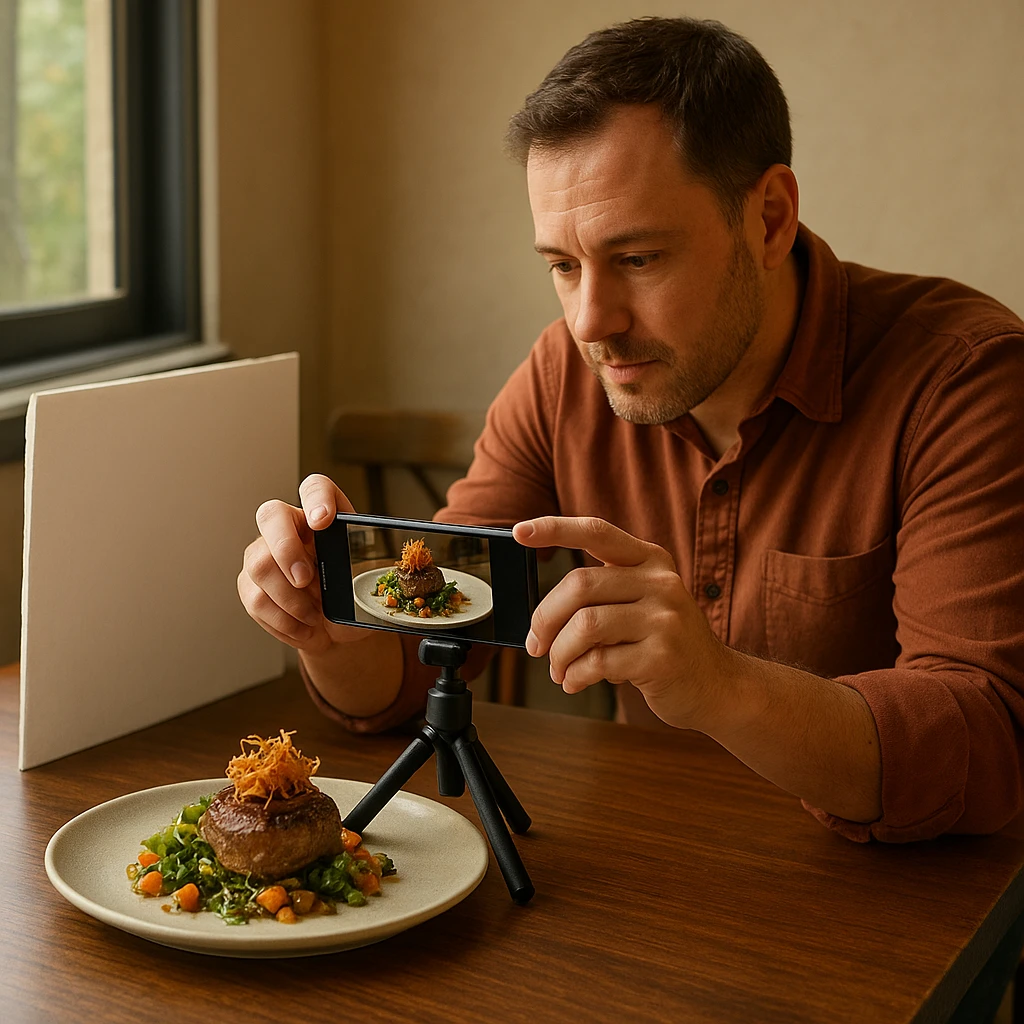
For restaurants on tight budgets, the DIY route offers an accessible entry point. Modern smartphone cameras have evolved dramatically. Recent models can capture food shots that rival pro equipment when paired with proper technique. The DIY approach eliminates line-item costs. No photographer fees. No studio rentals. No scheduling logistics. However, you trade money for time. Expect a learning curve and inconsistent results during early stages.
Successful DIY food photography hinges on mastering fundamentals. Professionals spend years refining these skills. Lighting is the single most critical factor. Natural light from windows provides beautiful illumination. But it limits shooting to daylight hours. Artificial lighting requires investment in lights or strobes. You also need knowledge of placement angles. Composition principles matter too. The rule of thirds, negative space, and angle selection all impact quality. Props and surfaces add production value. Stage food on complementary backgrounds. Add texture with linens. Include cutlery and ingredients for visual context.
The hidden challenge surfaces during post-processing. Raw images rarely look professional straight from the camera. Color correction, exposure adjustment, and sharpness enhancement require editing software. Lightroom, Photoshop, or mobile alternatives work well. But significant practice time is needed. What begins as a “quick shoot” often transforms into hours of editing per image. This compounds when managing hundreds of menu items. Consistency becomes nearly impossible without standardized processes. Different employees shooting on different days create a fragmented visual identity.
That said, DIY serves specific scenarios effectively. Food trucks and pop-ups can capture adequate images without external resources or commercial food photography budgets. Visually striking food (colorful smoothie bowls, layered desserts) may photograph well with minimal styling. The DIY approach also builds internal photography literacy. Team members who understand lighting make better decisions. This helps even when eventually hiring professionals. However, for high-volume needs across dozens of menu items, time and inconsistency costs typically outweigh savings.
DIY Food Photography Checklist
Equipment Essentials:
- Current-model smartphone with manual camera controls
- Tripod or stable mounting solution
- Reflector/diffuser set (or white foam board)
- Basic prop collection (linens, surfaces, utensils)
- Photo editing app/software
Shooting Fundamentals:
- Maximize natural light (shoot near north-facing windows)
- Clean camera lens before every shot
- Use grid overlay for composition alignment
- Shoot in RAW format when possible
- Capture multiple angles (overhead, 45-degree, side view)
Common Mistakes to Avoid:
- Using on-camera flash (creates harsh, unappetizing shadows)
- Shooting from standing height (creates unflattering perspective)
- Over-editing colors (food looks unnatural)
- Ignoring white balance (color casts affect appetite appeal)
- Cluttered backgrounds (distracts from the dish)
Hiring Freelancers: Balancing Quality and Budget
Hiring Freelancers: Balancing Quality and Budget
Freelance photographers offer affordable food photography options between expensive studios and DIY approaches. Platforms like Upwork, Fiverr, and local networks connect businesses with independent photographers. Rates run 30-60% below established studios. This pricing advantage stems from reduced overhead. Freelancers work from home studios. They handle their own post-processing. They operate with leaner business structures. For many restaurants, freelancers provide pro-quality imagery without premium studio pricing.
The freelancer marketplace offers distinct advantages beyond cost. Access to diverse specialties lets you match photographers to specific needs. Some excel at moody, atmospheric shots ideal for craft breweries. Others specialize in bright, clean aesthetics for health food brands. Geographic flexibility enables remote collaboration. Photographers anywhere can generate images from descriptions or reference photos. Local freelancers offer on-site shooting at your venue. This variety helps you find photographers whose portfolio aligns with your brand vision.
However, the freelancer route introduces trade-offs. Quality varies dramatically. You’ll find hobbyists with entry-level equipment. You’ll also find former studio photographers with pro gear and years of experience. Portfolio review becomes critical. But strong portfolios don’t guarantee consistent communication or reliable deadlines. Each new relationship requires onboarding time. You need to explain brand guidelines and establish feedback loops. This investment pays off for long-term relationships but diminishes with frequent changes.
Pricing structures follow multiple models. Per-project pricing ($50-150 per image) provides predictability. But it may bundle services you don’t need. Hourly rates ($40-100/hour) offer flexibility for smaller projects. But they create uncertainty about final costs. Day rates ($300-600) provide value for larger shoots. They require careful scoping to avoid scope creep. Some freelancers offer subscription models for ongoing content needs. Monthly deliverables at fixed rates benefit social media content where volume matters most.
Steps for Hiring Freelance Food Photographers
- Define project scope clearly-Specify number of dishes, delivery formats, usage rights, and deadlines upfront
- Request relevant portfolio samples-Ask for examples similar to your cuisine type and aesthetic preferences
- Check reviews and references-Previous client feedback reveals communication style and reliability
- Start with a test shot-Hire for one image before committing to larger projects to assess fit
- Establish clear agreements-Use written contracts specifying revisions, ownership, and payment terms
- Provide brand guidelines-Share existing imagery, mood boards, and specific requirements early
- Plan for iteration-Build revision rounds into timeline and budget for necessary adjustments
Freelancers excel in specific scenarios. Growing restaurants needing regular content find freelancer subscriptions more manageable than studio retainers. Multi-location chains can hire different freelancers regionally. They capture local menu variations while maintaining brand consistency through shared guidelines. Food brands launching new products benefit from freelancers’ quick turnaround. However, businesses needing hundreds of images monthly may struggle. Those requiring 24-hour turnaround or exact consistency may find freelancer coordination challenging.
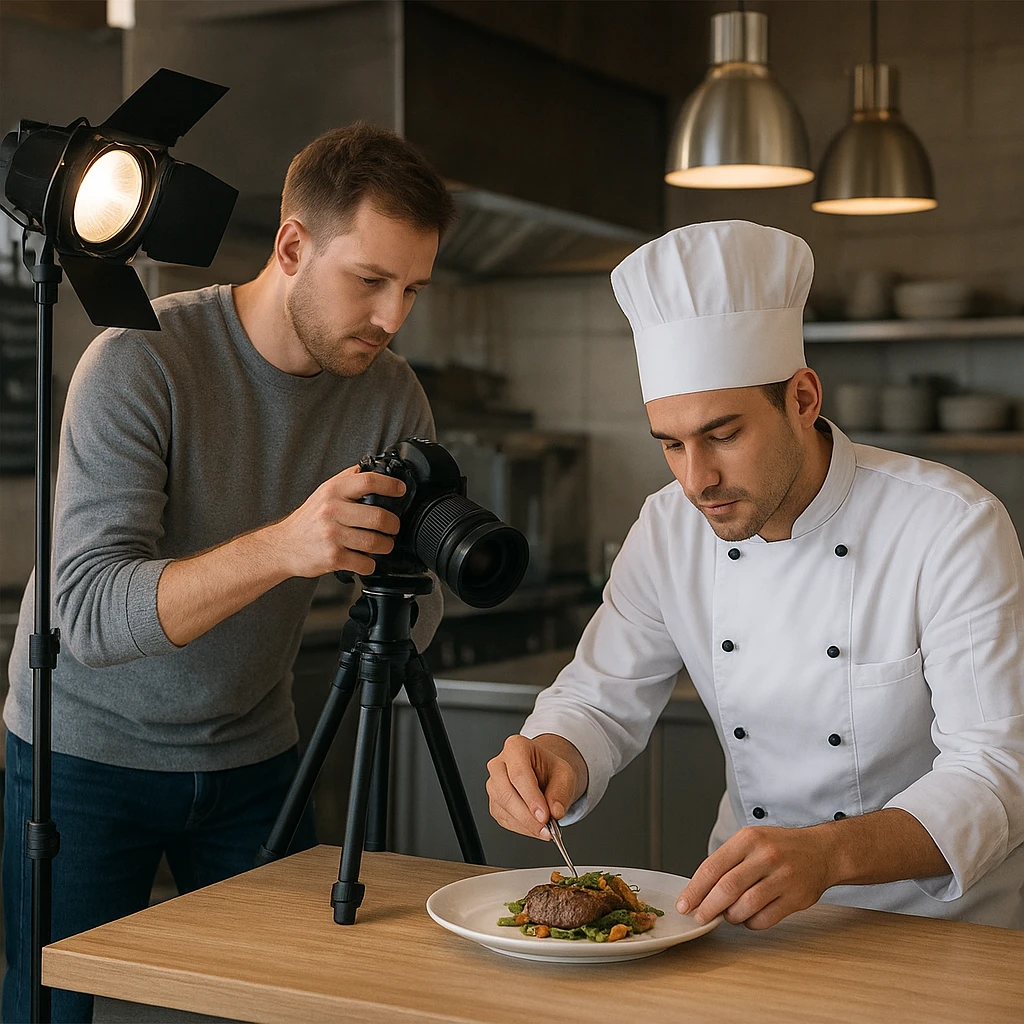
AI-Powered Solutions and the Future of Food Imagery
AI-Powered Solutions and the Future of Food Imagery
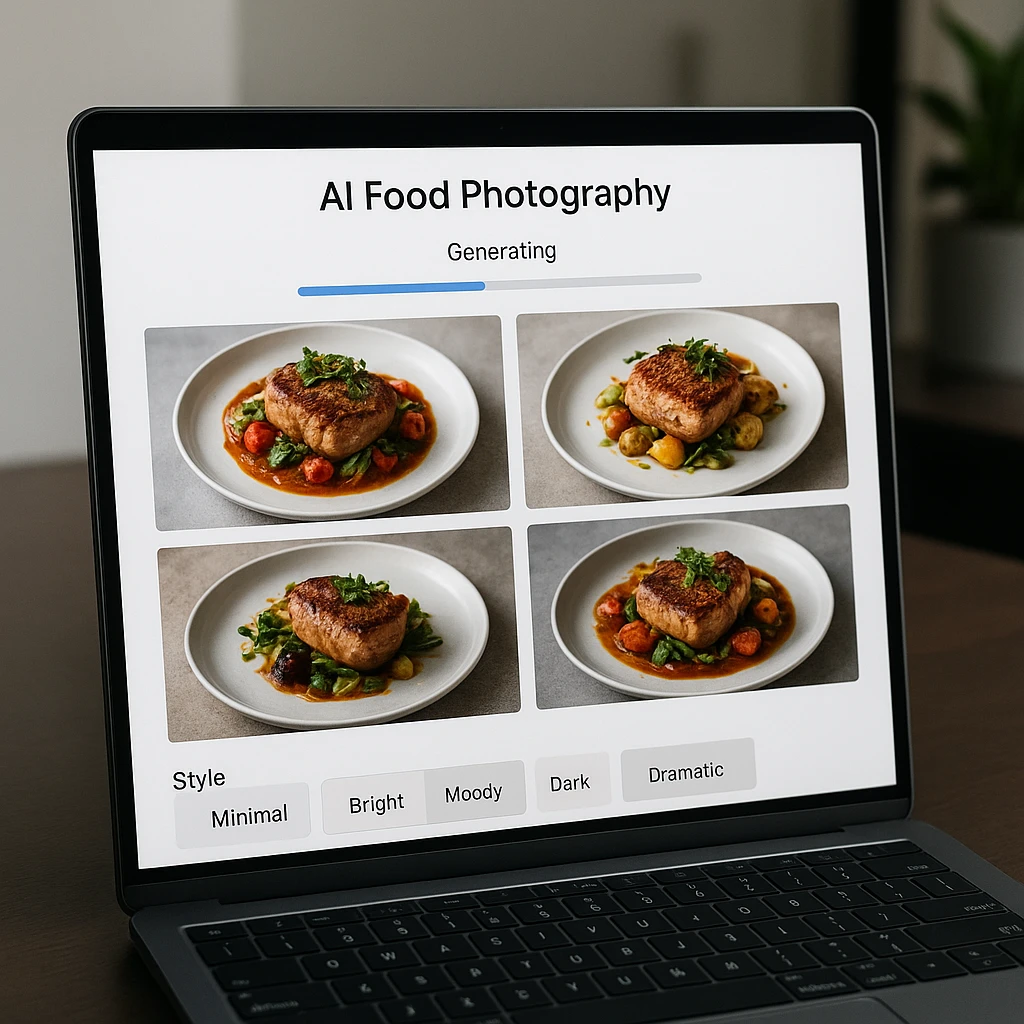
Artificial intelligence has transformed commercial food photography into an on-demand creative tool. Platforms like Yummify generate professional food images in minutes, not weeks. They use text descriptions or reference photos as input. This technology addresses core bottlenecks of traditional pro shoots. Scheduling logistics, per-project pricing, and limited iteration capacity all improve. New capabilities emerge: instant style variations and flexible testing.
AI food photography uses sophisticated models trained on millions of photos. Users provide input via prompt or reference photo. Describe your desired dish, styling, and environment. Or upload an existing food image for enhancement. The AI analyzes food content and validates that images contain actual food items. Then it generates styled versions based on your parameters. Advanced features like branded environments let businesses save their visual DNA. Store lighting preferences, color palettes, and aesthetic directions as reusable presets. Apply them consistently across hundreds of images. This consistency helps multi-location restaurants and franchises maintain brand identity.
The business model differs fundamentally from traditional pro shoots. Instead of per-project invoices, AI platforms use credit-based subscriptions. Credits renew automatically with monthly or yearly billing. Costs stay predictable and scale with volume needs. A restaurant generating 20 images monthly might use a Starter tier. A delivery platform producing 500 images weekly might need Premium or Ultra plans. This subscription approach aligns costs with ongoing usage. Each image isn’t a separate project. Quality upgrade options let you optimize spending. Generate variations at standard quality for testing. Upgrade only top performers to higher resolution. This test-first approach eliminates waste.
Speed represents the most dramatic advantage. Traditional pro shoots require weeks from concept to final delivery. AI generation delivers images within minutes. This enables same-day menu updates. You can respond rapidly to trends. Real-time A/B testing becomes possible.
A burger restaurant could generate five different styling variations of a new burger. Then test all five on Instagram simultaneously. Identify which drives highest engagement. Scale that winner across all marketing channels within 24 hours. This testing capability simply doesn’t exist with traditional photography without prohibitive costs and timelines.
The technology continues evolving rapidly. Current platforms support sophisticated styling control. Adjust lighting direction, depth of field, prop placement, and environment. Integration capabilities allow automated workflows. Menu data can feed directly into image generation systems.
As models improve, the aesthetic gap narrows between AI and traditional photography. This is especially true for menu photos, delivery app images, and social content. In these contexts, visual appeal matters more than authenticity.
AI Food Photography Use Cases by Business Type
| Business Type | Best AI Applications | Why It Works |
|---|---|---|
| Ghost Kitchens | All menu imagery from text prompts | No physical space for traditional shoots |
| Multi-Location Chains | Consistent branding across locations | Branded environments ensure uniformity |
| Delivery Platforms | Rapid image testing for conversion | Generate variations, test, scale winners |
| Food E-Commerce | Product photos at scale | Generate hundreds of SKUs efficiently |
| Social Media Teams | Daily content variations | Unlimited iterations for engagement |
AI doesn’t replace traditional photography entirely. Hero brand campaigns and high-end editorial work still benefit from professional artistry. Situations requiring absolute authenticity need the real thing. However, AI provides a complementary solution for high-volume, time-sensitive applications. It removes cost and timeline barriers. The future likely involves hybrid approaches. Use AI for volume content. Use freelancers for moderate-scope projects. Use traditional studios for signature brand imagery. Allocate each approach where it delivers optimal value.
Next steps
Ready to Transform Your Food Photography Strategy?
Traditional pro photography delivers exceptional quality for signature dishes and brand campaigns. But high-volume content demands smarter approaches. Yummify’s AI-powered platform generates professional food images in minutes. Credit-based subscriptions let you test variations. Maintain consistent branding. Scale content production without per-project pricing spikes.
Start with a free trial. Explore branded environments, quality upgrade options, and rapid generation capabilities. Build your image library strategically. Use Yummify for daily content, seasonal menu updates, and A/B testing. Reserve traditional photography for hero brand shots. This hybrid approach optimizes both budget and impact. Every marketing channel gets the imagery it needs without bottlenecks.
FAQ
How much does commercial food photography typically cost?
Traditional pro photography ranges from $150-300 per dish. Full menu shoots covering 20 dishes cost $3,000-6,000. This includes photographer fees, food stylist costs, studio rental, and post-processing. Freelance photographers offer middle-ground pricing at $50-150 per image. AI platforms like Yummify use credit-based subscriptions for predictable monthly costs.
What’s included in a professional food photoshoot?
Professional photoshoots include photographer time and expertise. Food stylist services cover plating and arrangement. You also get studio or location rental, lighting, equipment, and prop selection. Post-processing and editing follow. The process involves pre-shoot planning. The actual session runs 4-8 hours. Editing takes 1-2 weeks before final delivery. Costs reflect all these specialized components.
Can I get professional food photos without hiring a photographer?
Yes, several alternatives exist. DIY approaches using modern smartphones can produce adequate results. Proper lighting and composition knowledge helps. Consistency requires significant practice. AI-powered platforms like Yummify generate professional-quality images in minutes. Use text prompts or reference photos. Credit-based subscriptions keep costs predictable. Freelancers also offer middle-ground pricing between studios and DIY.
How does AI food photography compare to traditional shoots?
AI food photography generates images in minutes, not weeks. It uses subscription pricing instead of per-project invoices. Unlimited variations enable testing. Traditional pro shoots deliver artisanal quality and authenticity ideal for brand campaigns. But they lack speed and flexibility for high-volume content needs. Many businesses use both. AI handles menu items and social content. Traditional photography covers signature hero shots.
What should I look for when hiring a freelance food photographer?
Review portfolios for examples matching your cuisine type and aesthetic preference. Check reviews and references for communication style and reliability. Start with a single test image before committing to larger projects. Ensure clear agreements about deliverables, revisions, usage rights, and timelines. Provide brand guidelines and reference images upfront. Freelance photographers typically charge 30-60% less than established studios.
How can I reduce food photography costs without sacrificing quality?
Combine approaches strategically. Use traditional pro shoots for signature dishes that represent your brand. Use AI generation for high-volume menu items and testing. Use freelancers for ongoing content needs. Maximize each photoshoot by capturing multiple dishes per session. Build prop collections for reuse. Maintain detailed shot lists. Some restaurants invest in basic equipment and training for team members to handle simple social content in-house.
How many food photos do I actually need for my restaurant?
Delivery-focused restaurants typically need 3-5 high-quality images per menu category. Full-service restaurants benefit from at least one signature photo per menu item. That’s 20-50 images total for average menus. Social media requires 3-7 posts weekly for engagement. That translates to 150+ images annually. E-commerce brands need product photos for every SKU plus lifestyle shots. Assess your channels: delivery apps, website, social media, print materials. Calculate realistic volume needs for your strategy.
Related posts
15 Creative Food Photography Ideas to Make Your Dishes Stand Out
Discover creative food photography ideas to make your dishes stand out. Learn action shots, deconstructed dishes, unique angles, storytelling, and AI tools for stunning food visuals.
Beyond Burgers: AI Food Styling for Diets and Cuisines
Use AI food styling to create accurate vegan, gluten-free, halal, kosher, and global cuisine photos that convert across delivery apps, QR menus, and social.
Close the Loop: Tie Food Imagery to Analytics and Sales
Stop guessing which food photos work. Learn a simple workflow to tie Yummify images to analytics, A/B test visuals, and promote only the photos that actually sell.